Cycles 21-22: Baroque, Caravaggio
Page 1
Form II Art History Supplementary Material
Cycle 21 – Baroque - Caravaggio
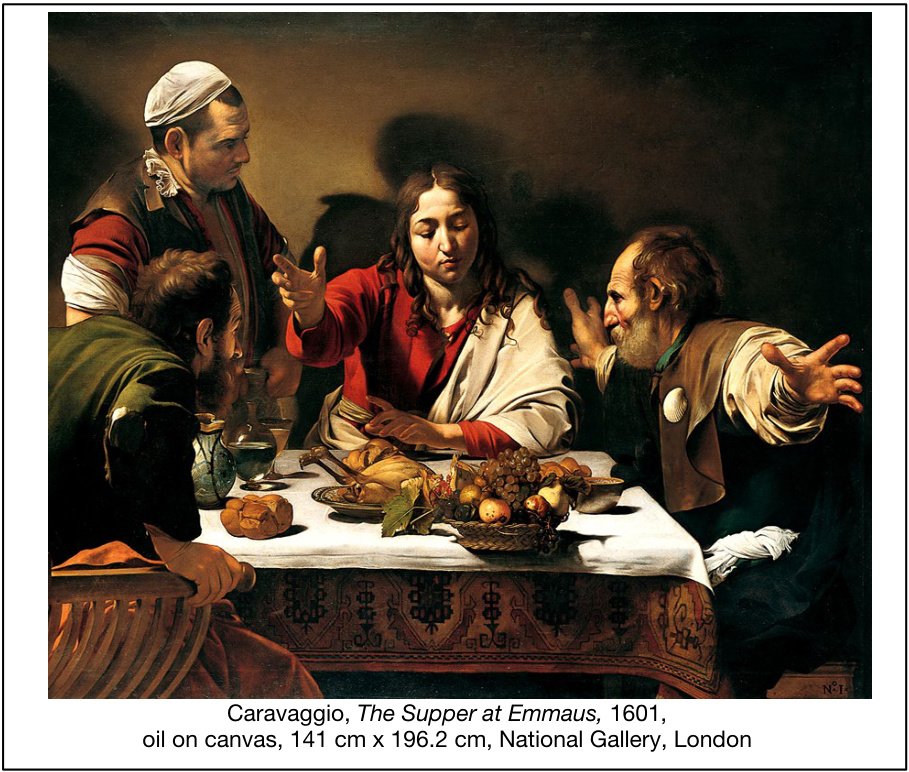
Caravaggio, The Supper at Emmaus, 1601,
oil on canvas, 141 cm x 196.2 cm, National Gallery, London
Name: _____________________________________________________ House / Tutor: ______________________________________________ Master: ____________________________________________________
Page 2
Form II Art History Supplementary Material
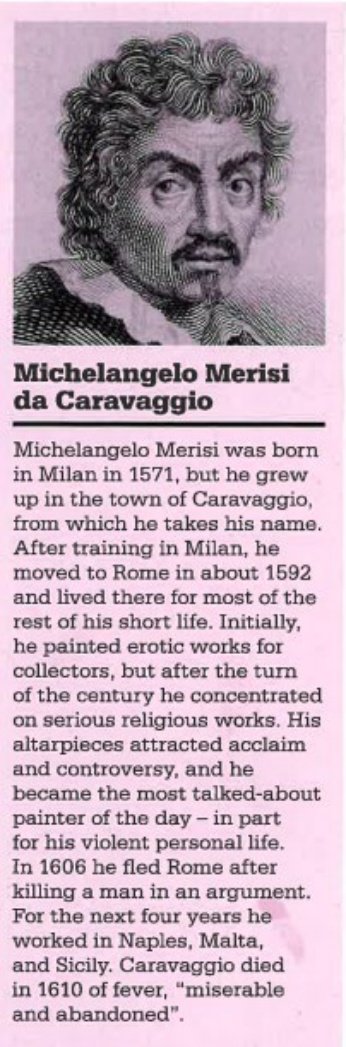
Caravaggio was considered enigmatic, fascinating, rebellious, and dangerous throughout his lifetime. Caravaggio has a distinct style of painting known as tenebrism .
Tenebrism , from the Italian word Tenebroso (meaning ‘gloomy’) is used to describe the overall darkness and tonal contrast in the painting. The use of dark shadows to obscure parts of the composition, the tenebrism technique depicts stark contrasts of light and dark or ‘chiaroscuro’ (from chiaro, ’clear’, and oscuro ‘dark’). Chiaroscuro creates a sense of depth and illumination in the artwork.
‘…he never brought his figures out into the daylight, but placed them in the dark room, using a high light that descended vertically over the principal parts of the bodies whilst leaving the remainder in the shadow in order to give force through a strong contrast or light and dark.’
Giovanni Pietro Bellori, 1672 (one of Caravaggio’s earliest biographers).
By 1600, Caravaggio was established as the most influential painter in Rome. He was commissioned to paint several major works for prominent Roman churches between 1601-1605, pushing him even more into the public domain. Some of these paintings were rejected at the time by the Church as the striking everyday realism Caravaggio painted was deemed disrespectful.
1
Page 3
Form II Art History Supplementary Material
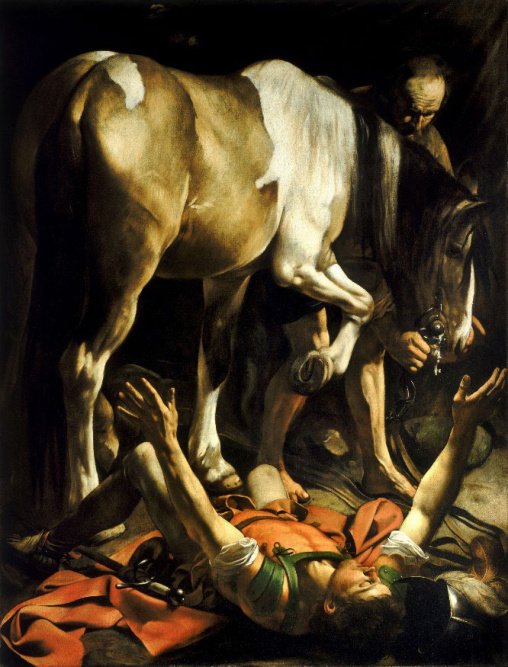
The Conversion of St Paul (Conversion on the Road to Damascus), 1601, 230 cm x 175 cm, oil on canvas
As he neared Damascus on his journey, suddenly a light from heaven flashed around him. He fell to the ground and heard a voice say to him, "Saul, Saul, why do you persecute me?"
"Who are you, Lord?" Saul asked.
"I am Jesus, whom you are persecuting," he replied. "Now get up and go into the city, and you will be told what you must do."
The men traveling with Saul stood there speechless; they heard the sound but did not see anyone. Paul got up from the ground, but when he opened his eyes, he could see nothing. So they led him by the hand into Damascus. For three days, he was blind and did not eat or drink anything.
— Acts 9:3–9
2
Page 4
Form II Art History Supplementary Material
Read pages 216-217 in your textbook and answer the following questions:
- Why was the commission of The Conversion of St Paul considered controversial?
- How is a sense of drama captured in this painting? List three compositional features Caravaggio has employed for dramatic effect.
i)__________________________________________________________________________ ___________________________________________________________________________ ii)__________________________________________________________________________ ___________________________________________________________________________ iii)_________________________________________________________________________ ___________________________________________________________________________
- How does this painting reflect Caravaggio’s interest in ‘dramatic realism’? Refer to his use of colour and tone.
3
Page 5
Form II Art History Supplementary Material
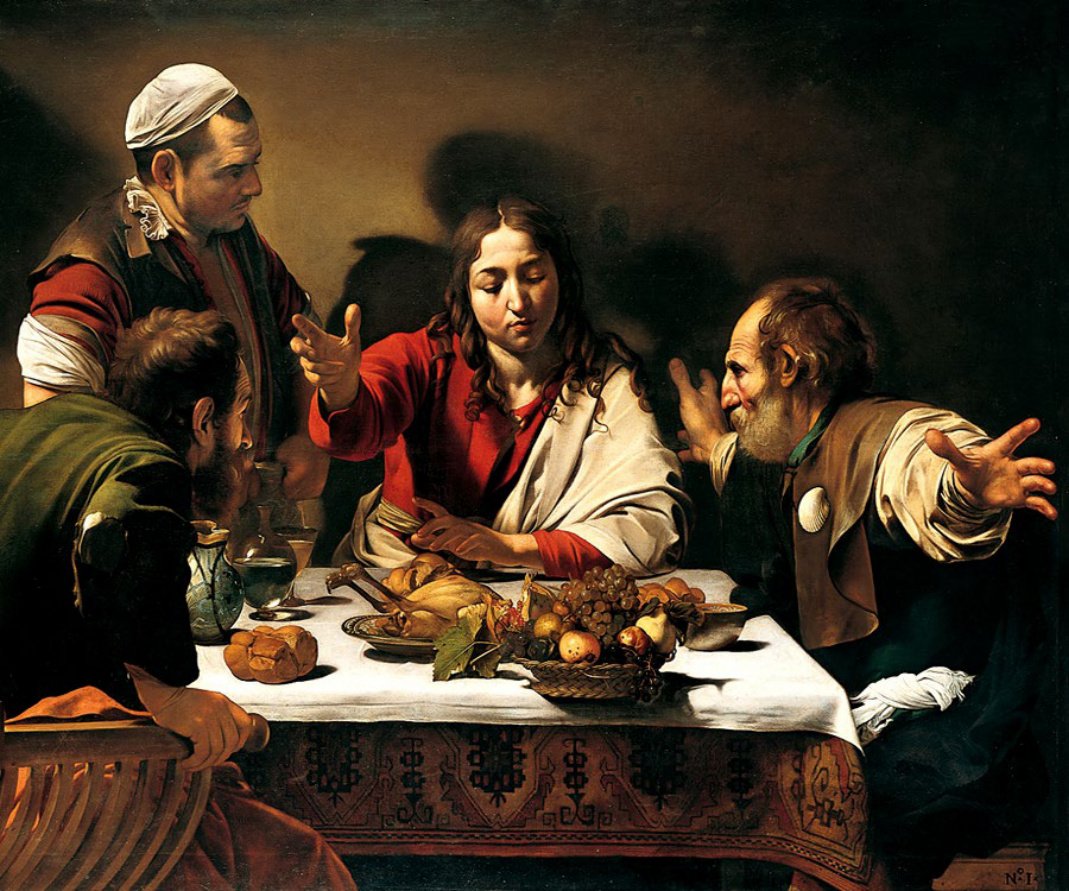
Caravaggio, The Supper at Emmaus, 1601, oil on canvas, 141 cm x 196.2 cm, National Gallery, London
In ‘The Supper at Emmaus’ , Caravaggio achieves dramatic effect with chiaroscuro. The evening meal offers a natural pretext for presenting a room in darkness, from which the characters emerge by virtue of varied and specifically directed lighting. One light, judging by the shadow above Christ’s head, seems to be coming from a low angle, possibly by fire or lantern. Secondly, a second source of light is illuminated from a ‘higher place’ that turns the tablecloth stark white, subtly suggesting the divine nature of the event because of the common identification of God as a brilliant source of light.
4
Page 6
Form II Art History Supplementary Material
Watch the Khan Academy Video on The Supper at Emmaus’ and answer the questions below.
https://www.khanacademy.org/humanities/renaissance-reformation/baroqueart1/baroque-italy/v/caravaggio-the-supper-at-emmaus-1601
- What story is being depicted in this artwork?
- Who is the main figure in the centre of the artwork?
How does Caravaggio ‘invite’ the audience into this artwork? List two examples.
| i) _ |
|---|
ii) _ |
- How has Caravaggio created an ‘ordinary’ scene here? List three examples.
i)_____________________________________________________________________ ______________________________________________________________________ ii)_____________________________________________________________________ ______________________________________________________________________ iii)_____________________________________________________________________ ______________________________________________________________________
5
Page 7
Form II Art History Supplementary Material
OIL PAINTING
Towards the end of the fifteenth-century, Italian artists began to experiment with oil paint as their primary medium. As oil paint is slower to dry than egg tempera, the artist can employ a greater variety of brushstrokes and effects. Unlike egg tempera, some pigments are transparent when mixed with oil, therefore it is possible to use them in thin washes or glazes to modify the underlying colour, creating a sense of greater depth, brilliance, and contrast.
Linseed was the oil most used as the basis for paints, although walnut was also widely used in Italy. These oils are known as 'drying oils': unlike other vegetable oils such as olive or sunflower, they slowly polymerise to form a hard layer. Artists could alter the characteristics of the oil by leaving it in the sun in a jar, or by boiling it, to create a thicker oil which was quicker to dry and produced a smooth 'enamel-like' surface. Drying oils were also thinned with distilled essential oils such as Oil of Spike (lavender) to give a more fluid paint.
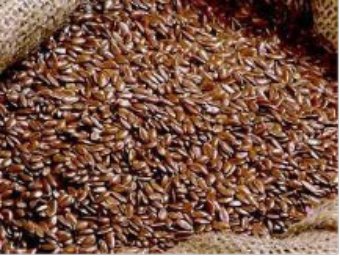
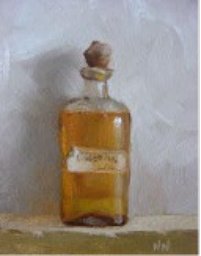
Linseed oil comes from the flax plant, which also gives us linen cloth – the canvas used in painting.
Oil as a paint medium had been used in Italy prior to the fifteenth century (for example to glaze over metal leaf on tempera paintings) however, oil painting had been developing in Northern Europe, especially by German and Flemish artists, since at least the thirteenth century. It was the cultural cross-fertilisation between Northern Europe and Italy during the fifteenth century that saw Italian artists begin to adopt oil as a painting medium.
Source: Panel to Canvas: Technical Transition in early Italian Renaissance Painting by David Wise
6
Page 8
Form II Art History Supplementary Material
NOTES
7
Page 9
Form II Art History Supplementary Material
8